The problem
Video is the one medium almost everyone records and almost no one finishes. A trade fair leaves three hours on a card. A webinar leaves sixty minutes. A customer interview from March sits in a folder, unwatched, because the cost of a proper cut was never the editing software — it was the hours of watching before the first decision could be made.
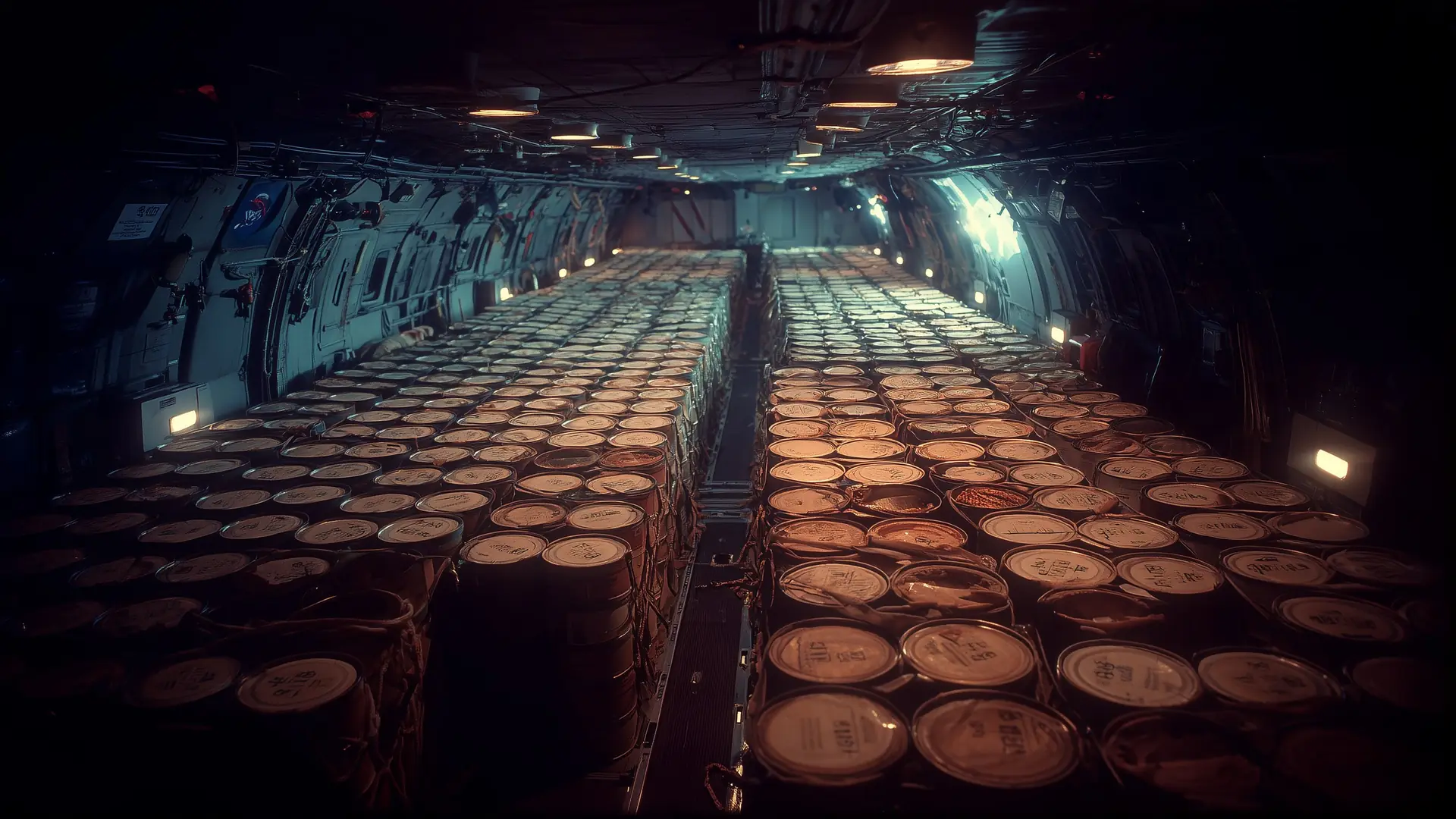
Seen as a system, raw footage is an unobserved one. Nobody knows what is in it, what was said, or which thirty seconds matter. The information exists but is not legible, so the material is never acted on.
What it does
Endroll is a desktop video editor for Windows with an AI assistant editor built in. It takes the same approach the other systems in this Observatory take — index everything, make it legible, let the person state intent, let the system propose, and let the person decide — and applies it to a hard drive full of footage.
Point. Aim it at a folder: phone clips, camera cards, last week's interview. A local node indexes everything on the machine: what is in each shot, what is said, what is usable. The full footage never leaves the computer.
Tell. Write what the video should say — a brief, a full script, or a draft the system writes from what was actually shot. The AI finds the moments and builds a cut, with pacing, captions and music under the dialogue. It does not invent material; it only chooses and orders what exists.
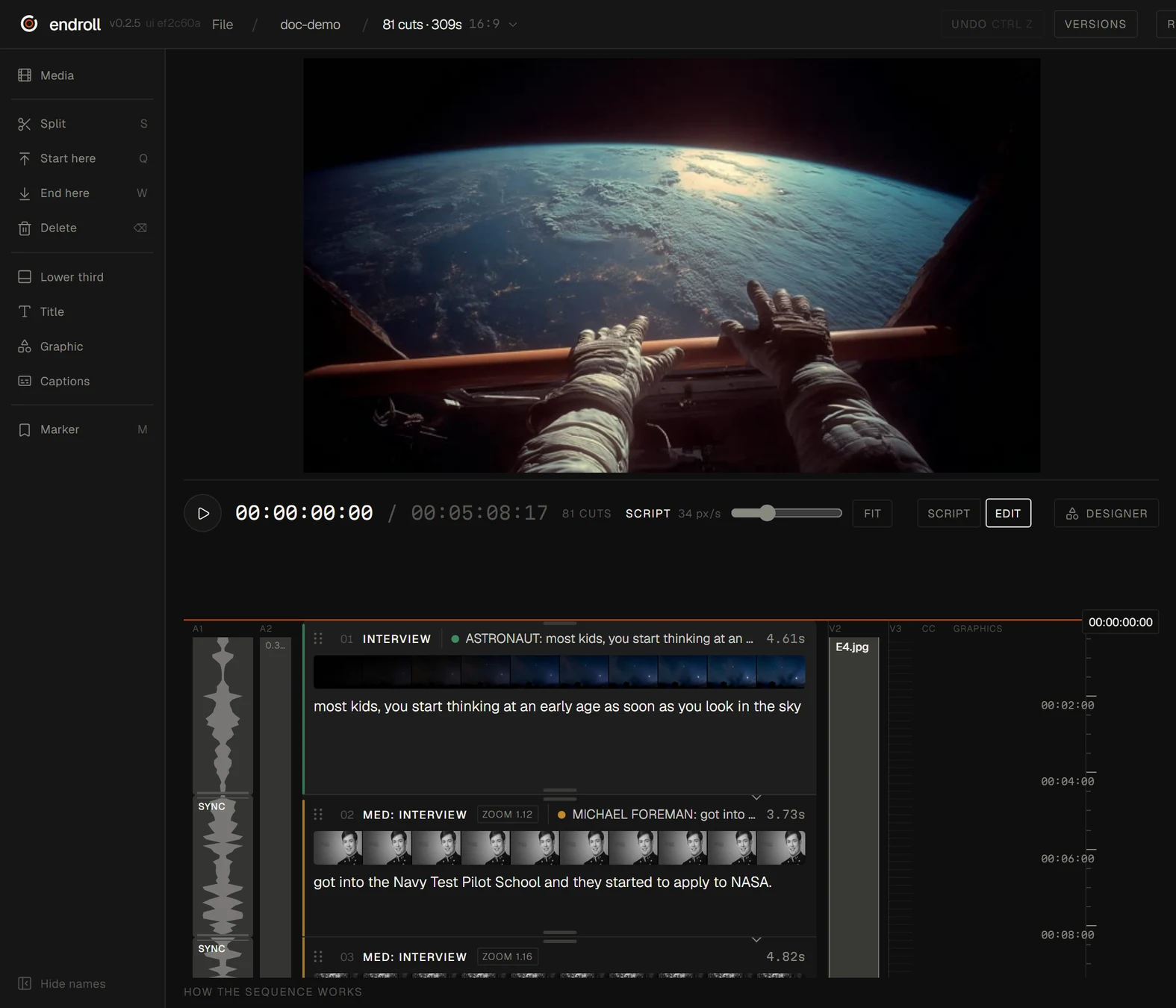
Approve. The result arrives as a real timeline, not a sizzle reel: every shot is a row carrying the line spoken in it. Approve it, or say what to change in plain words. Mechanical edits — trim this, drop that — happen on the spot. Creative work is a re-cut, and it shows its price before anything runs.
How it is built
The editor runs the heavy work locally and the reasoning remotely. Indexing, transcription, search and rendering happen on the person's machine. The language model never sees the footage, only the index, and it talks to the local node through the Model Context Protocol — the same interface an agent uses to operate any tool.
Everything the cut needs is in the box: cuts that begin and end where the speaker does, captions burned in or exported as subtitles, music from the person's own library or generated from a prompt, graphics described in a sentence, speed from 25 to 400 % with captions and cuts following the same clock, and multi-camera sync. When the cut is done, the timeline exports to DaVinci Resolve, Premiere Pro or Final Cut Pro; a companion panel on Adobe Exchange puts the transcript on a Premiere timeline as markers.
Usage is metered in credits, and every paid operation states its cost first. The app updates itself in the background.

Why it matters
Endroll is the first system in this Observatory that is a shipped product rather than a demonstration. It is the proof that the method — one live model of the material, multiple ways to act on it, judgment left with the human — holds up when real people put real footage through it every day.
It also settles a question the AI agent experiments keep raising: where does an agent genuinely add to a workflow? Here the answer is specific. The agent watches, indexes and proposes. The person decides what the story is, and keeps the final say on every cut.
Scope
In production since summer 2026. Available for Windows 10 and 11 at endroll.ai, with a free trial and monthly plans; a Mac version is in progress. Developed and sold by RagingRam Oy, Helsinki.